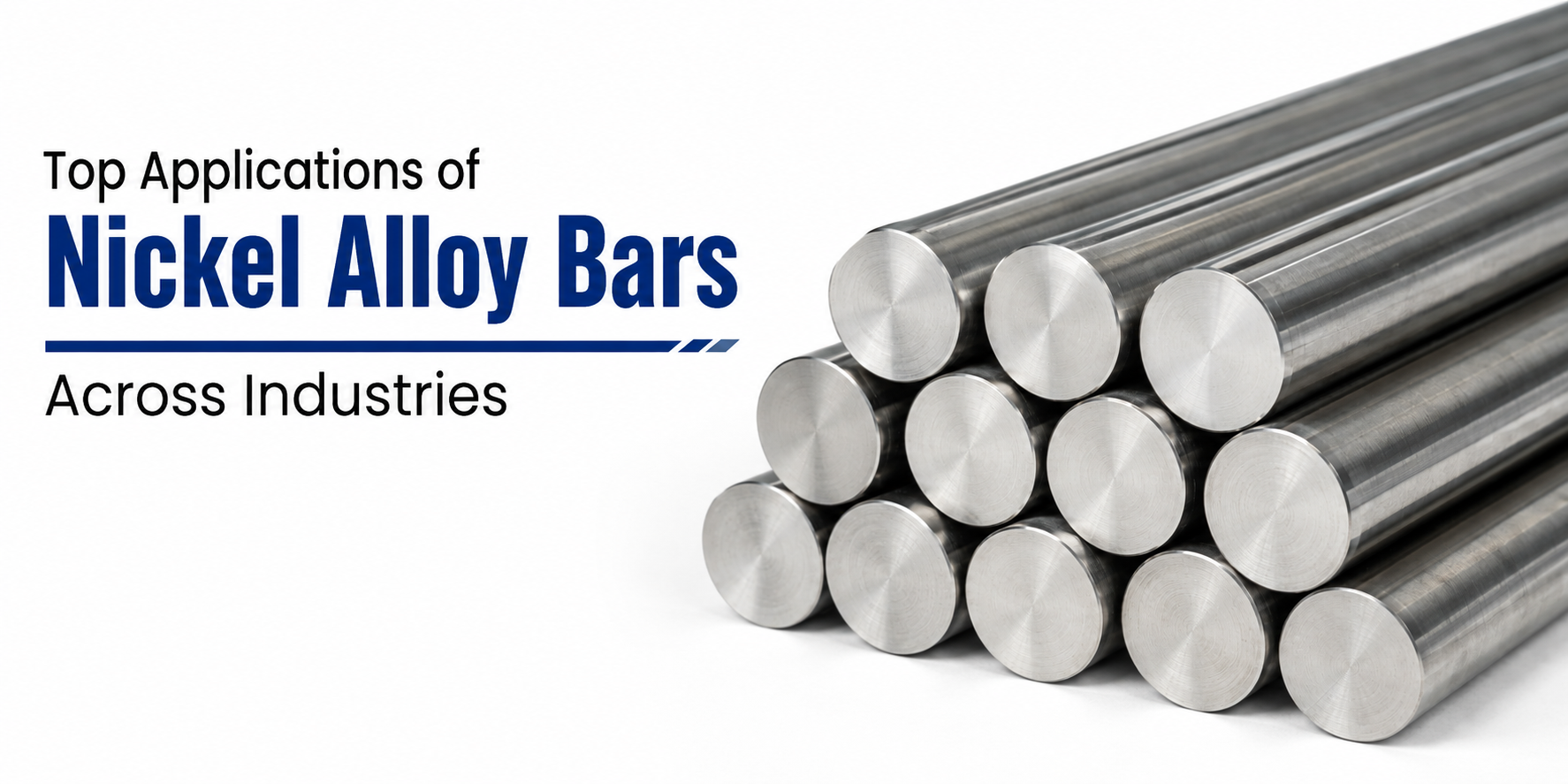
Nickel alloy bars hold up in conditions that wear out standard steel fast. They resist corrosion, tolerate heat, and carry load without giving way. That’s why grades like Inconel, Monel and Hastelloy show up so often in nickel alloy bar applications across oil and gas, chemical plants, aerospace, marine work and power generation.
Why are Nickel Alloy Bars Used Across Industries?
Most plants pick nickel alloy bars because the app lications involves heat, acid, seawater, or constant strain, or a combination of all. Stainless steel copes with oxidation up to around 800°C. Inconel 625 keeps its strength well past 1000°C. Seawater is another problem; stainless steel starts pitting within a couple of years on offshore platforms or desalination plants. Nickel alloys last longer here, which is why they get specified despite the higher cost.
Top Industrial Applications of Nickel Alloy Bars
Oil & Gas Industry
Offshore rigs deal with seawater, hydrogen sulfide, and pressures past 10,000 PSI. Drilling tools, valve stems and pump shafts made from nickel alloy bars are built for this. Hastelloy and Inconel resist sulfide stress cracking, which usually kills standard alloy steel in wellhead equipment within a few months.
Chemical Processing
Reactors, heat exchangers, pumps and valves handling sulfuric, hydrochloric or phosphoric acid use nickel alloy bars for shafts and fittings. Monel 400 handles hydrofluoric acid even at full concentration with barely any metal loss. Hastelloy C276 is the one people reach for when a line sees both oxidizing and reducing acids.
Aerospace & Aviation
Turbine blades, discs and shafts inside jet engines run near 700°C while spinning at thousands of RPM. Inconel 718 and Inconel 625 go into these parts because they keep tensile strength above 1,200 MPa even after long heat exposure.
Marine & Shipbuilding
Propeller shafts, seawater pump parts, desalination hardware, all of it sits in saltwater for years between dry docks. Monel and nickel-copper bars resist chloride pitting and biofouling better than 316 stainless steel, so vessels in warm, tropical waters get longer service life out of them.
Power Generation
Boiler tubes, steam turbine shafts and heat exchanger parts go through daily temperature swings, from ambient right up past 600°C. Nickel alloy bars used for fasteners and shaft components resist creep and thermal fatigue across thousands of these cycles, meaning fewer unplanned outages in coal and gas fired plants.
Food & Pharmaceutical Processing
Mixers and agitator shafts in pharma plants get exposed to cleaning agents and sterilisation chemicals every day. Nickel alloy bars resist pitting from chlorine-based sanitizers and keep a smooth finish, which is what FDA and 3-A sanitary standards require for anything coming in contact with the product.
How to Choose the Right Nickel Alloy Bar
Start with temperature. Inconel 625 is built for continuous service above 1000°C. Monel 400 works for moderate heat and adds strong resistance to hydrofluoric acid and seawater. Next, look at chemical exposure. Hastelloy C276 covers both oxidizing and reducing acids, so it’s the usual pick for mixed chemical lines. Strength matters too. Inconel 718 delivers tensile strength above 1,200 MPa, useful for load bearing parts. Whatever grade you land on, check it against ASTM or ASME standards before finalising the spec.
Conclusion
Nickel alloy bars are built for conditions that would wear standard steel down fast, whether that’s heat, acid, or constant mechanical load. The grade chosen decides how long the part lasts. Match it to the temperature, the chemical exposure and the strength needed, and it will outlast low-quality alternatives by years. Niko Steel & Engineering has been a leading supplier and stockist of nickel alloy bars since 1981. Reach out to us with your requirements and our team will provide you with the quotation as soon as possible.
Frequently Asked Questions
What are nickel alloy bars used for?
They go into shafts, fasteners, valves and structural parts across oil and gas, chemical processing, aerospace and marine equipment, anywhere standard steel would fail early from heat or corrosion.
Which industries use nickel alloy bars the most?
Oil and gas, chemical processing and aerospace use the most. Marine engineering, power generation and pharmaceutical manufacturing aren’t far behind, mostly because of corrosive or high-heat conditions.
Are nickel alloy bars better than stainless steel?
Yes. In chloride-heavy, high-acid, or high-heat environments, stainless steel pits or loses strength. For milder jobs, stainless steel is usually the better, more practical option.
Which nickel alloy grade suits high-temperature applications?
Inconel 625 and Inconel 718 hold up well past 1000°C and 700°C. Both keep their tensile strength and resist oxidation in turbine blades, boiler parts and exhaust systems.