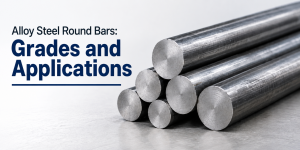
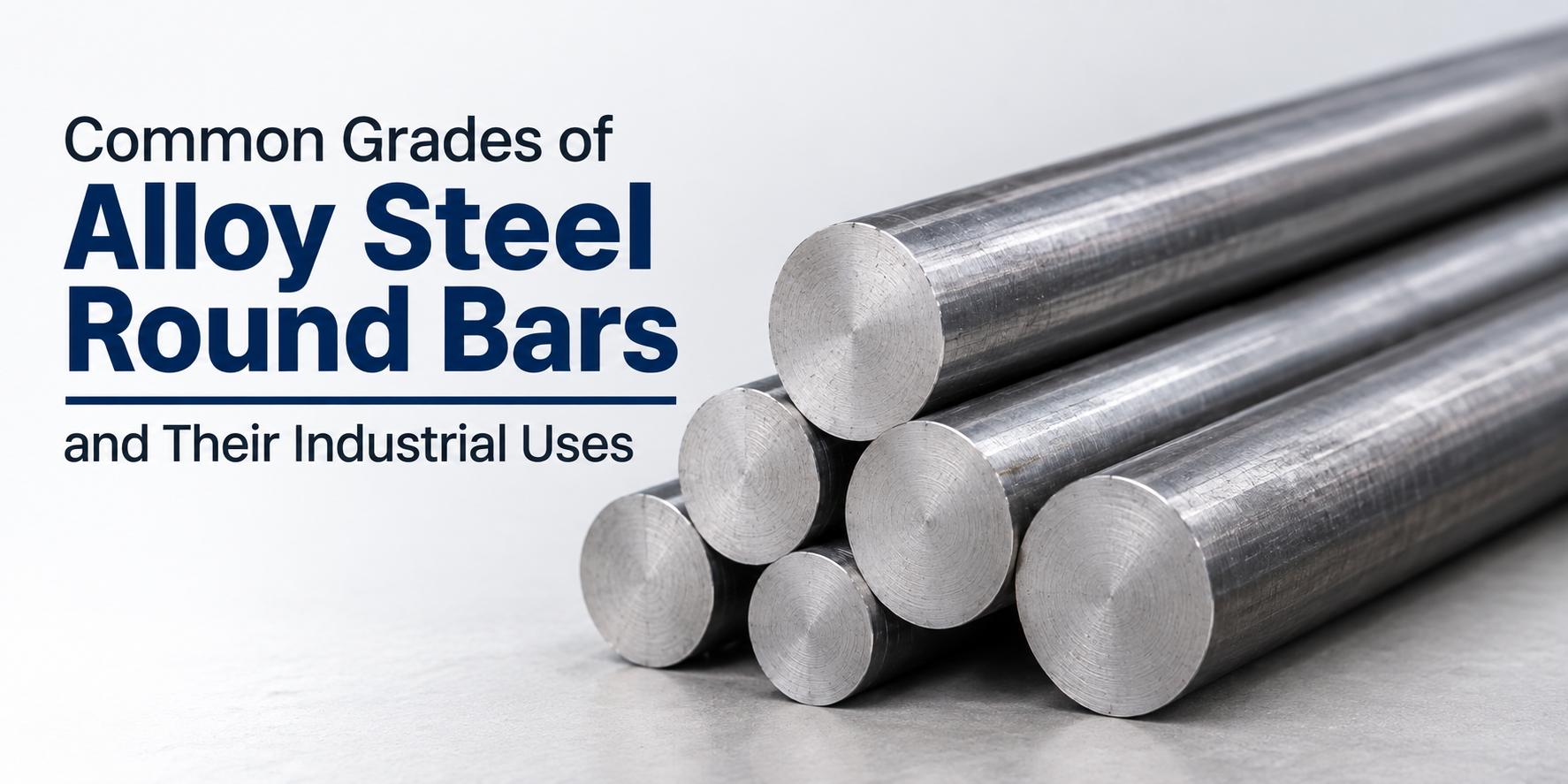
Alloy steel round bars combine iron with chromium, nickel, molybdenum, or vanadium to raise strength and hardness beyond plain carbon steel. Each grade has its property mix, from toughness to wear resistance and hardenability. Industries match their alloy steel round bars grades and uses to the task, since a bearing and a landing gear component act differently under load.
What Makes Alloy Steel Round Bars Suitable for Industrial Applications?
Chromium raises hardenability, molybdenum stabilizes strength at elevated temperatures, and nickel adds toughness and impact resistance. These elements push alloy steel round bars toward higher tensile strength and wear resistance. Fatigue resistance matters too: repeated stress cycles crack plain carbon steel long before an alloy grade fails. Against carbon steel, alloy steel round bars hold their mechanical properties longer under sustained load.
Common Grades of Alloy Steel Round Bars and Their Uses
Five grades cover most industrial demand: EN19, EN24, EN31, AISI 4140, and AISI 4340, each balancing strength, hardness, and toughness differently.
EN19 Alloy Steel Round Bars
Chromium and molybdenum form the base of EN19 alloy steel round bars. Hardening and tempering raise tensile strength to roughly 850- 1000 N/mm², with excellent toughness as well. Automotive manufacturers use EN19 for crankshafts, gears, and transmission shafts; machinery builders use it for connecting rods and fasteners.
EN24 Alloy Steel Round Bars
Nickel joins the chromium-molybdenum base in EN24 alloy steel round bars, lifting fatigue strength well beyond EN19, with tensile strength reaching up to 1550 N/mm² when fully hardened. That fatigue resistance is suitable for heavy-duty shafts and gears running through millions of load cycles. Aerospace makers specify EN24 for landing gear parts and high-torque gearbox components.
EN31 Alloy Steel Round Bars
High-carbon chromium chemistry gives EN31 alloy steel round bars their defining trait: surface hardness. Heat treatment brings the surface to 60- 65 HRC, resisting rough use well. Bearing manufacturers rely on EN31 for ball and roller bearings; toolmakers use it for dies, punches, and cutting tools.
AISI 4140 Alloy Steel Round Bars
AISI 4140 alloy steel round bars share EN19’s chromium-molybdenum chemistry and respond well to oil quenching, letting fabricators harden select sections of a component. Oil and gas operators specify 4140 for drill collars and tool joints, and the same bars go into fasteners and shafts.
AISI 4340 Alloy Steel Round Bars
AISI 4340 steel round bars contain a combination of nickel, chromium, and molybdenum, which provides high tensile strength and excellent impact resistance. Defense and aerospace engineers specify 4340 for aircraft landing gear and high strength bolts and shafts that are subjected to shock loads. Producers of mining and construction equipment also use it for heavy-duty shafts.
How to Choose the Right Alloy Steel Round Bar Grade
Load type sets the starting point: static load requires a different profile than cyclic or shock loading. Wear resistance matters most where surfaces slide or roll against each other, favoring EN31 over a nickel-chromium grade like EN24. Machinability affects production cost, since higher-alloy grades require longer machining time. Heat treatment needs and operating environment narrow the choice further.
Conclusion
Alloy steel round bars are available in several grades, each designed for different mechanical properties. EN19, EN24, EN31, AISI 4140 and AISI 4340 are used for them all, from automotive shafts to aerospace landing gear. Niko Steel & Engineering LLP stocks and supplies all five grades as round bars.
Frequently Asked Questions
Which alloy steel round bar grade is most commonly used?
EN19 and AISI 4140 see the widest use across automotive and general engineering work for their balance of strength, toughness, and machinability.
What is the difference between EN19 and EN24?
EN24 adds nickel, giving it higher fatigue strength and toughness than EN19. EN19 suits general shafts and gears; EN24 suits heavier, cyclic-load parts.
Which alloy steel grade is best for gears and shafts?
EN24 and AISI 4340 handle high-stress gears and shafts best, combining high tensile strength with strong fatigue and impact resistance.
Are alloy steel round bars heat-treatable?
Yes. EN19, EN24, AISI 4140, and AISI 4340 all respond to hardening and tempering, letting fabricators adjust strength and hardness as needed.