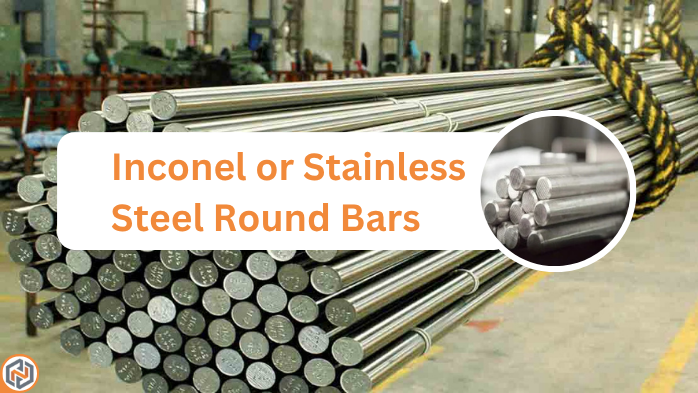
Selecting the right bar material shapes machining costs and how long a component survives in service. Round bars appear across fabrication, fasteners, shafts, valves, and aerospace components. The most common are Inconel Round Bars and Stainless Steel Round Bars and they are built for different demands. Both resist corrosion and hold up under load. But they diverge sharply on temperature tolerance, strength, and price. This guide compares nickel alloy round bars like Inconel against stainless steel bar grades so buyers can match the right alloy to their operating conditions.
What Are Inconel Round Bars?
Inconel Round Bar is a nickel-chromium alloy designed to function in extreme environments. Oxidation resistance holds firm past 1000°C in several grades. Inconel 600, Inconel 625, and Inconel 718 cover most industrial demand. Aerospace turbines run on Inconel, along with oil and gas wellheads, power turbines, and chemical reactors wherever heat and corrosion attack together.
What Are Stainless Steel Round Bars?
Stainless steel round bars carry chromium on an iron base rather than a nickel one. That chromium forms a passive layer resisting rust across most industrial atmospheres. SS 304, SS 316, Duplex Stainless Steel, and 17-4 PH cover the bulk of specified grades. Construction, food processing, and automotive shops favor stainless steel because it machines faster and costs less than nickel alloys.
Key Differences Between Inconel and Stainless Steel Round Bars
Material Composition: Inconel runs primarily on nickel with chromium. Stainless steel runs primarily on iron with chromium as the protective element.
Corrosion Resistance: Both resist corrosion well. Inconel pulls ahead in aggressive chemical baths and marine chloride exposure.
High-Temperature Performance: Inconel keeps its strength above 1000°C. Stainless steel loses integrity in extreme ranges.
Mechanical Strength: Inconel retains strength under high-temperature load. Stainless steel delivers solid strength for structural work.
Fabrication and Machinability: Stainless steel machines quickly with standard tooling. Inconel demands specialized cutting speeds.
Cost Considerations: Inconel costs considerably more per kilogram. Stainless steel remains the economical option.
Also Read: Inconel vs Hastelloy vs Monel Round Bars
Inconel vs Stainless Steel: Property Comparison
A quick side-by-side clarifies where each material earns its place on a spec sheet.
| Property | Inconel Round Bars | Stainless Steel Round Bars |
| Base Element | Nickel | Iron |
| Max Service Temp | Above 1000°C | Up to 870°C |
| Corrosion Resistance | Superior in aggressive media | Strong in general use |
| Machinability | Specialized tooling required | Machines readily |
| Relative Cost | High | Moderate |
Applications of Inconel Round Bars
Aerospace Industry: Used in turbine engines to survive repeated thermal cycling without cracking.
Oil & Gas Sector: These round bars are specified in wellhead components that handle sour gas and extreme downhole pressure.
Chemical Processing Plants: It is found in reactors that withstand acidic and caustic process streams daily.
Power Generation: Used in boiler tubing and turbine blades that tolerate sustained high heat.
Marine Engineering: Applied in offshore fittings that resist constant saltwater chloride attack.
Applications of Stainless Steel Round Bars
Construction Industry: Structural framing resists weather without staining.
Food & Beverage Industry: Processing equipment meets hygienic standards and cleans without pitting.
Automotive Manufacturing: Shafts and fasteners deliver a practical strength-to-cost ratio.
Water Treatment Plants: Pump shafts resist chlorinated water corrosion.
General Engineering: Fabrication shops rely on stainless steel across most machined parts.
How to Choose the Right Material for Your Project
Match the material to the environment first, then weigh the budget. If temperatures are above normal alloy limits, oxidation can lead to constant failure, or if the application is aerospace, power generation, or petrochemical service, then select high-temperature round bars in Inconel. Select stainless steel when moderate conditions, cost effectiveness and easier fabrication are more important than extreme performance.
Quick Selection Checklist:
- Operating temperature
- Corrosion exposure
- Mechanical load requirements
- Fabrication needs
- Industry standards
- Budget
Choosing a Reliable Round Bar Supplier
You can rely on an Inconel Round Bar supplier to maintain a stock of different grades and sizes, offer certification and traceability for every batch, and perform testing before dispatching the product. Technical guidance helps you select an alloy and avoid early mistakes. Consistent inventory and compliance with ASTM and ASME standards separate a supplier worth calling from one that leaves a project waiting.
Conclusion
Inconel and stainless steel round bars both deliver corrosion resistance, but they serve different missions. Inconel earns its price in extreme heat and aggressive chemical exposure. Stainless steel remains practical for construction, food processing, and general engineering work. The right choice depends on temperature, corrosion exposure, load, and budget weighed together. Pick a reliable supplier for optimal performance and long-term value.