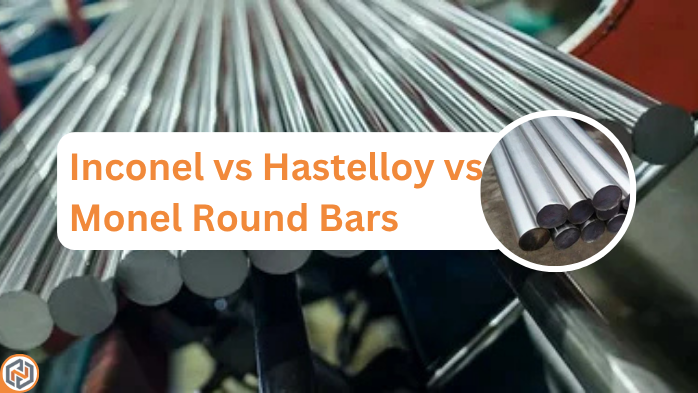
Ordinary steel cracks above 500°C. Acid damages it in weeks. Industries running high-temperature reactors, chemical plants, and offshore rigs solve this with nickel-based alloys instead. Inconel, Hastelloy, and Monel round bars each answer a different combination of heat, acid, and mechanical load, and the wrong choice shortens equipment life within a single service cycle. This blog compares Inconel vs Hastelloy vs Monel using nickel alloy grades, high temperature alloys, and metals as the framework.
Understanding Nickel Alloy Round Bars
Nickel Alloy Round Bars are cylindrical stock made from nickel-based compositions instead of carbon or stainless steel. Buyers switch to them when stainless steel starts pitting under acid or sagging under sustained heat. Nickel’s crystal structure resists oxidation better than iron-based alloys, cutting maintenance intervals in demanding plants. Four properties matter most: corrosion resistance, high-temperature stability, mechanical strength, and oxidation resistance. Inconel, Hastelloy, and Monel each own a different corner of that list.
What Are Inconel Round Bars?
Nickel and chromium are the key components of Inconel Round Bars, giving them oxidation resistance at temperatures that deform most metals. Strength holds through thousands of thermal cycles. Grades include Inconel 600, 625, and 718, each carrying a different chromium and molybdenum ratio for specific heat loads. Aerospace manufacturers build turbine components from it, and gas turbine makers, heat exchanger fabricators, and petrochemical processors specify it wherever heat meets structural stress.
What Are Hastelloy Round Bars?
Chemical plants running sulfuric or hydrochloric acid lines need something acid cannot dissolve. Hastelloy Round Bars combine nickel, molybdenum, and chromium into an alloy built for exactly that. Grades C22, C276, and B2 cover most demand, each tuned for a different acid profile. Pharmaceutical equipment builders, pollution control manufacturers, and marine chemical handling operations reach for Hastelloy first when acid exposure defines the job.
What Are Monel Round Bars?
Saltwater destroys most alloys within a few years. Monel Round Bars, built from nickel and copper, resist it for decades while holding real mechanical toughness under load. Monel 400 covers standard marine duty, and Monel K500 adds precipitation hardening for higher-strength jobs. Offshore platform builders, marine engineering firms, and pump and valve manufacturers specify Monel whenever saltwater defines the environment.
Inconel vs Hastelloy vs Monel: Key Comparison
Chemical Composition
Inconel runs nickel-chromium, Hastelloy runs nickel-molybdenum-chromium, and Monel runs nickel-copper, and this base chemistry drives every difference below.
Corrosion Resistance
Hastelloy resists acids and aggressive chemicals better than the other two; Monel performs well in seawater; and Inconel resists oxidation at high temperature.
High-Temperature Performance
Inconel leads above 800°C, Hastelloy holds up in chemical reactors running moderate to high heat, and Monel suits service under 500°C best.
Mechanical Strength
Precipitation-hardened Inconel grades deliver the highest strength, Monel K500 adds strong toughness for marine loads, and Hastelloy balances strength against acid resistance.
Cost Considerations
Hastelloy carries the highest price tag due to its acid-resistant chemistry. Inconel commands a premium for high-temperature performance. Monel is in the middle, priced for seawater application.
Quick Comparison Table
| Property | Inconel | Hastelloy | Monel |
| Base Composition | Nickel-Chromium | Nickel-Molybdenum-Chromium | Nickel-Copper |
| Best For | High temperature | Aggressive chemicals | Seawater exposure |
| Common Grades | 600, 625, 718 | C22, C276, B2 | 400, K500 |
| Relative Cost | Premium | Highest | Mid to premium |
Applications by Industry
- Oil and gas rigs use Inconel for high-temperature equipment, Hastelloy for corrosive process lines, and Monel for offshore hardware.
- Chemical plants lean on Hastelloy for most equipment, reserving Inconel for high-heat reactors.
- Marine projects favor Monel for seawater-facing parts, with Inconel handling specialized high-heat components.
- Power plants build boilers and turbines from Inconel and protect flue gas systems with Hastelloy.
- Aerospace manufacturers use Inconel extensively for heat resistance; Monel and Hastelloy fill only narrow roles there.
How to Choose the Right Nickel Alloy Round Bar
Operating temperature above 800°C points toward Inconel. Corrosive chemical exposure points toward Hastelloy. Constant seawater contact points toward Monel. Fatigue resistance and toughness narrow the choice within each family, and budget sets the final limit on performance versus lifecycle cost.
Quick Alloy Selection Checklist:
- Operating environment
- Temperature range
- Corrosion type
- Mechanical load
- Industry standards
- Budget
Choosing a Reliable Round Bar Supplier
Full material certification and traceability from mill to delivery keep off-spec stock off the job site. A supplier stocking multiple corrosion-resistant round bars across grades saves buyers from juggling several vendors on one project. In-house testing catches defects before dispatch, and compliance with ASTM and ASME standards keeps documentation audit-ready. Dependable inventory and delivery timelines protect project schedules, and sound technical guidance prevents costly alloy mismatches.
Conclusion
Each alloy is for a different problem. Inconel resists long-term heat, Hastelloy resists aggressive chemicals and Monel resists seawater corrosion. If you match properties to real operating conditions, the equipment will last decades; otherwise, it will fail within a few years. Consult with a reputable supplier of industrial nickel alloy applications to help you pick the right material for your project’s temperature, corrosion and budget needs.